

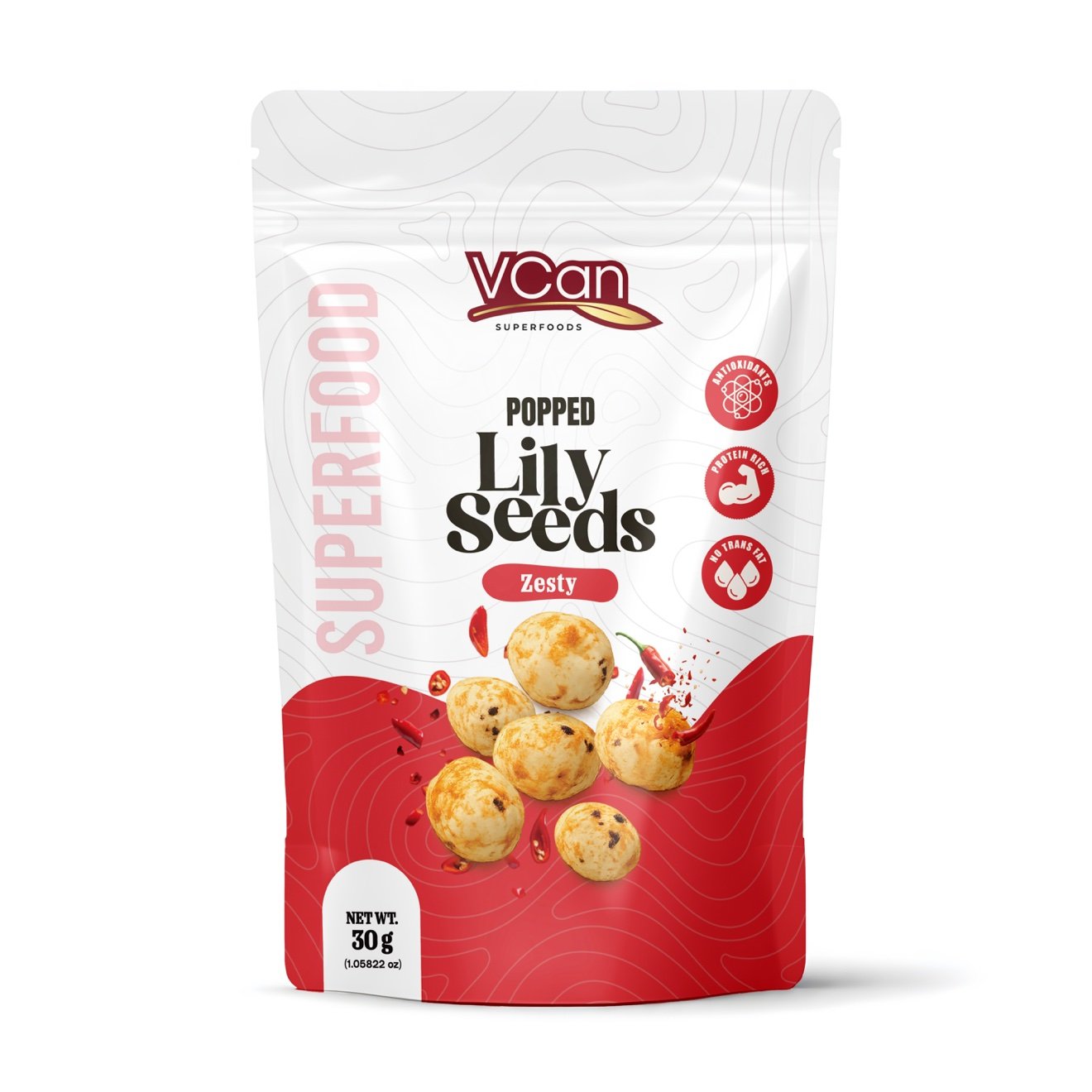
What Is Makhana?
Makhana — also known as popped lily seeds or fox nuts — is the seed of the Euryale ferox water lily, harvested from ponds in Bihar, India, where most of the world’s supply is grown. When the seeds are roasted, they pop into light, white, crunchy puffs, a little like popcorn — only more nutritious.
Makhana has been eaten in India for centuries as both food and traditional medicine, and is a staple during religious fasts because it gives clean, sustained energy while being gentle on digestion. At VCan Superfoods, we bring that ancient Indian superfood to modern American snacking: carefully sourced makhana, gently roasted (never deep-fried) into a grab-and-go crunch.
Why Your Snack Choice Matters
Most snack aisles run on the same formula: refined flour or potato, cheap frying oil, salt, and flavor dust. A typical serving of chips can carry 150+ calories, 10 grams of fat, and almost no protein or fiber — so you’re hungry again in twenty minutes.
Makhana flips that formula. One 30g pack of VCan makhana (about 1 cup) has roughly 130 calories, 3g of plant protein, 2g of dietary fiber, 0g trans fat, and 0mg cholesterol — because it’s baked/roasted, not fried. It’s portion-controlled by design: one pack, one satisfying snack, no mindless handfuls from a family-size bag.
6 Reasons to Make Makhana Your Daily Snack
1. Real crunch, without the frying
Makhana is roasted until it pops, so you get the crispy satisfaction of chips with a fraction of the fat — and no trans fat at all. If you love snacking, this is the swap that doesn’t feel like a sacrifice.
2. Plant protein + fiber that actually fills you up
With plant-based protein and fiber in every pack, makhana keeps you full longer than empty-calorie snacks. It’s a smart pick between meals, at your desk, in the car, or after a workout when you want something light but substantial.
3. Helpful minerals and antioxidants
Makhana also provides small amounts of minerals such as calcium and potassium (the VCan Zesty pack lists 14mg calcium and 116mg potassium per 30g serving), along with antioxidants such as flavonoids that help protect your cells from everyday oxidative stress as part of a balanced diet.
4. Low glycemic index — steady energy, no sugar crash
Makhana has a low glycemic index (around 37), meaning its carbohydrates are released slowly. Instead of the spike-and-crash you get from sugary or refined snacks, you get steady energy — one reason makhana is traditionally recommended for people watching their blood sugar. Portion control still matters, and if you manage diabetes, follow your doctor’s guidance.
5. Gentle on digestion
Light, low-fat, and easy to digest, makhana is traditionally used in Ayurveda to support digestion. It’s a snack that doesn’t sit heavy — perfect for evening movie nights when chips leave you feeling sluggish.
6. It fits every snacking moment
- Movie night: the popcorn upgrade — all crunch, less fat
- Desk drawer: portion-controlled fuel that won’t wreck your afternoon
- Post-workout: light protein and minerals after training
- Travel & lunchboxes: a 30g pack goes anywhere
- Evening cravings: satisfying crunch without the guilt
How Much Makhana Should You Eat?
For most people, one 30g pack a day is a perfect snack portion — roughly 130 calories with protein, fiber, and minerals. Think of makhana as a replacement for one fried or sugary snack a day, and the upgrade adds up fast over a month.
Why VCan Makhana?
- Authentic source: imported from India from an FDA-registered manufacturer (Shhe Foods Private Limited, Darbhanga, Bihar)
- Baked, never fried — 0g trans fat, 0mg cholesterol
- Plant-based and protein-rich, with antioxidants in every pack
- Six flavors, one for every mood: Salt & Pepper, Zesty, Cheddar Cheese, Cream & Onion, Sweet Chilli, and Vegan Herb
- Just $3.49 a pack, shipped anywhere in the US for a flat $6.95
Allergen note: VCan makhana flavors carry peanut and/or milk allergen alerts — please check the label of your flavor before snacking.
Ready to snack smarter? Browse all six flavors and find your favorite: Shop Makhana. New to makhana? Start with a few different flavors and see which one disappears first at your house.
Pair your daily crunch with daily fiber — read why psyllium husk deserves a place in your routine.
Frequently Asked Questions
Is makhana the same as lotus seeds?
Makhana is often sold as “lotus seeds” or “popped lily seeds.” It comes from the Euryale ferox water lily (a lotus relative), and in India it’s also called fox nuts. Same crunchy snack, several names.
Is makhana good for weight management?
As part of a balanced diet, yes — it’s low in calories for its volume, roasted rather than fried, and its protein and fiber help you feel full. Swapping a fried snack for a 130-calorie pack of makhana is an easy daily win.
Can I eat makhana every day?
Yes. A 30g pack a day fits comfortably into most diets as a snack. As with any food, variety matters — rotate your flavors and keep the rest of your diet balanced.
When is the best time to eat makhana?
Mid-morning, late afternoon to beat the vending-machine run, after a workout, or a small pack in the evening. There is no wrong time for a better crunch.
This article is for general information only and is not medical advice. These statements have not been evaluated by the FDA. Makhana is a food, not a medicine, and is not intended to diagnose, treat, cure, or prevent any disease. Talk to your healthcare provider about what’s right for you.
1 Comment
Psyllium Husk: The Daily Fiber Habit Your Gut (and Heart) Will Thank You For - Vcan Superfoods
October 4, 2026[…] One fizzy glass a day is the easiest health habit you’ll ever keep — for your digestion, your heart, and steadier energy. Try it here: Psyllium Fiber + Fizz – Lemon and Psyllium Fiber + Fizz – Orange ($22.99 each). New to fiber drinks? Pair it with a crunchy daily snack and read our guide to makhana, the ancient Indian superfood snack. […]